How to Care for Handmade Ceramic Dinnerware: Washing, Stacking, and Everyday Use

There is a moment, usually somewhere around the third dinner, when a new handmade plate stops being precious and becomes dinnerware. That is exactly what it was made for. The potter who threw it, trimmed the foot ring, and dipped it in glaze did not expect it to live behind glass. Still, a plate made by hand is not the same as a plate pressed out by the thousand, and a few small habits make the difference between a set that looks tired after two years and one you are still eating from in fifteen.
None of this requires fussing. It requires knowing which things actually damage ceramic and which are just folklore.
Why handmade pieces behave differently
Most handmade dinnerware falls into two broad families. Earthenware is fired at lower temperatures: it is warmer to the touch, often thicker, and its clay body stays slightly porous, which is why it usually carries a full glaze on the underside as well as the top. Stoneware and porcelain are fired higher, becoming dense and vitrified, tough enough for daily abuse but still capable of chipping at a thin rim.
Two features matter most in daily use. The first is the glaze, a thin glass layer that can craze — develop a fine web of cracks — either deliberately, as a design choice, or gradually over time. The second is the foot ring, the unglazed circle underneath that keeps the piece stable. That bare clay is why a handmade mug can scratch a wooden table if you drag it, and why a stack of plates needs a little more thought than a stack of factory ones.
The single most useful thing you can do is know your own pieces. A note from the maker, a stamp on the base, or the shop's description will usually tell you whether a bowl is oven-safe, dishwasher-friendly, or best kept for salad and fruit. When that information is missing, assume the gentler option.
Washing: by hand most days, and when the dishwasher is fine
Hand washing is the safest default, and it takes less time than people expect. Rinse the piece in warm water, wipe with a soft sponge and a small amount of ordinary dish soap, then rinse again. Skip the scouring pad, the steel wool, and any cleaner labelled abrasive — they dull a glossy glaze and can wear away hand-painted decoration over months.
Pay attention to three places: the rim, where food and lipstick collect; the inside curve of mugs, where coffee oils settle; and the foot ring, which traps water against bare clay. A soft brush helps in deep bowls and narrow necked jugs.
Dishwashers are not automatically the enemy. Many stoneware and porcelain pieces survive decades of machine washing. What tends to cause trouble is the combination of hot drying cycles, harsh detergent, and pieces rattling against each other. If you do use the machine:
- Load plates and bowls so they cannot knock together during the cycle.
- Use a gentle or eco setting with a lower drying temperature, and leave the door open afterwards to let steam escape.
- Keep handmade mugs away from the tines of the cutlery basket, which are a common source of chips.
- Wash gold, platinum, and other metallic lustre decoration by hand only — those finishes wear thin in a machine.
- Never machine wash a piece with a visible crack or a repaired break.
Earthenware, and anything with a matte or crackle glaze, is best kept out of the dishwasher entirely. Crackle glazes in particular can hold water in the fine surface cracks, and repeated hot cycles are unkind to them.
Drying and stacking without chips
Most chips happen not while eating but while putting things away. Two habits solve nearly all of it.
First, dry properly. Let pieces air dry upside down on a rack or a folded towel for an hour or two before they go in the cupboard, so moisture does not sit in the foot ring. Stacking damp plates traps water between them and can leave a faint musty smell.
Second, put something between them. A felt pad, a thin cork mat, a paper coffee filter, or even a clean cotton napkin between each plate costs almost nothing and prevents rim-to-glaze contact. Bowls nest better with a small square of cloth underneath each one. Mugs should stand upright and not be hung by their handles — the handle is the most vulnerable part of the piece, and the weight of a mug pulling on it for years is a slow, unnecessary stress.
Keep stacks modest. Four to six plates is plenty; a tower of twelve puts real weight on the bottom piece, and it is always the bottom one that cracks.
Heat, cold, and thermal shock
Thermal shock is the sudden change in temperature that makes glaze and clay expand at different rates. It is the reason a cold bowl can crack when you pour boiling soup into it, and why a hot dish straight from the oven should never meet a wet countertop.
Practical rules that cover almost every case:
- Warm a cold bowl or jug with a little hot tap water before filling it with something very hot.
- Let oven dishes cool on a dry wooden board or a folded towel, never on stone or a wet surface.
- Do not put handmade ceramics straight from the fridge into a hot oven, or from the oven into cold water.
- Check with the maker before using anything in the oven, microwave, or freezer; not every glaze and clay body is suited to each.
For the microwave, the reliable test is a simple one: heat a mug of water alone for a minute and feel the body of the mug. If it becomes uncomfortably hot to hold, the clay is absorbing energy and the piece is better kept for cold drinks. As a general guide, pieces with metallic lustre or gold rims should stay out of the microwave.
Stains, metal marks, and everyday scuffs
Cutlery leaves grey marks on glazed plates, and they look worse than they are. Those lines are usually tiny deposits of metal rubbed onto the glaze, not scratches through it. A paste of bicarbonate of soda and water, rubbed gently with a fingertip or soft cloth, lifts most of them. For stubborn cases, a little white vinegar left to sit for a few minutes will help.
Tea and coffee tannins can darken the inside of a mug over years, especially where the glaze is fine-crazed. A soak in warm water with a spoonful of bicarbonate of soda, followed by a normal wash, usually restores it. Avoid bleach on handmade pieces; it is harsh on glazes and unnecessary.
Do not worry about a patina of fine scratches on a well-used plate. It is the mark of a piece doing its job.
Small chips, cracks, and knowing when to stop
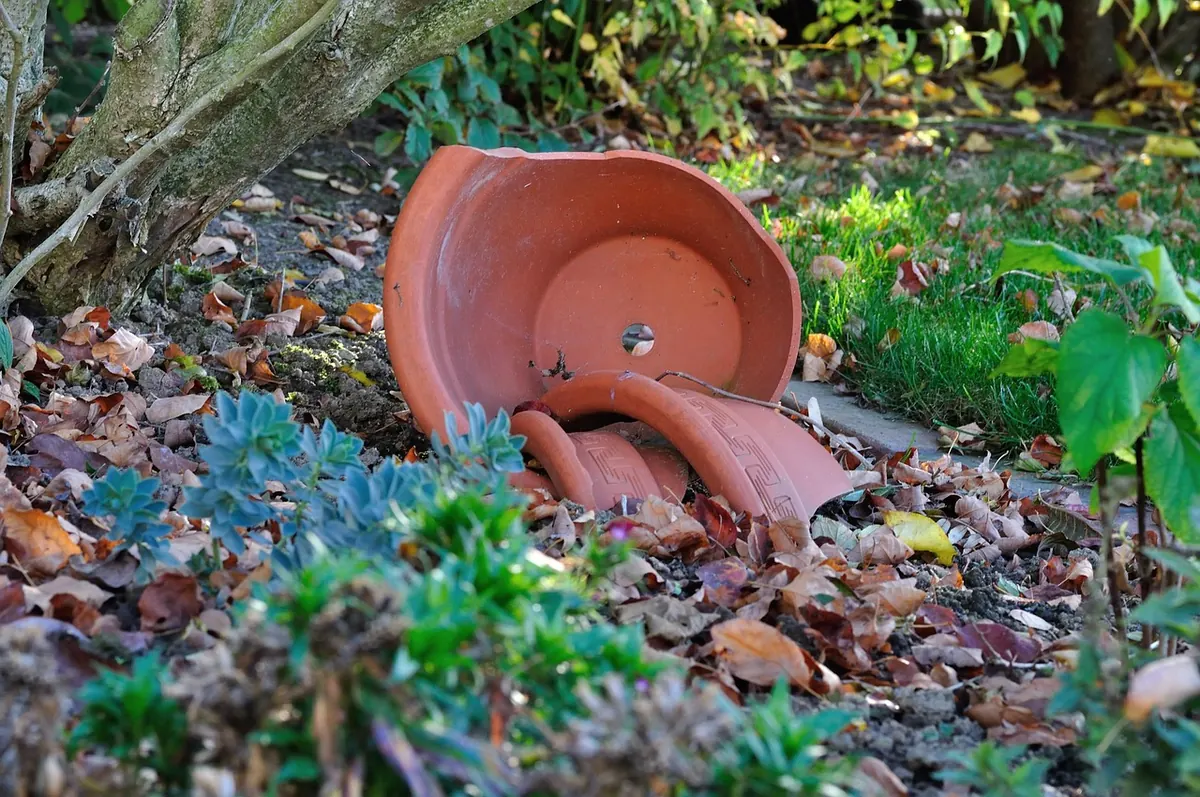
A chip on the rim of a serving platter is annoying but usually harmless. A chip on the lip of a mug you drink from is different: rough glaze can cut, and a crack that runs into the body of the piece will worsen with heat and washing. Retire drinking vessels and anything that has cracked through the wall, and move chipped pieces to duty as spoon rests, plant saucers, or pen pots.
If a piece you love breaks, a professional ceramics restorer can often make a clean, food-safe repair. Home glues are fine for a decorative object but not for a surface that will hold hot food or go through washing-up.
A simple routine that keeps a set going
Hand wash the pieces you use most, stack them with a cloth between each one, and dry them upside down before they go away. Keep metallic finishes and crackle glazes out of the dishwasher, warm cold bowls before hot soup, and never move a hot dish onto a cold wet surface. Check the rims of mugs with your thumb now and then, and retire anything that has cracked through.
That is the whole system, and it takes about a minute a day. Handmade dinnerware rewards that minute generously: the glaze keeps its depth, the rims stay smooth, and the plates you bought because you liked the look of them are still the ones you reach for a decade later.
Photo: Sophkins / Pixabay